
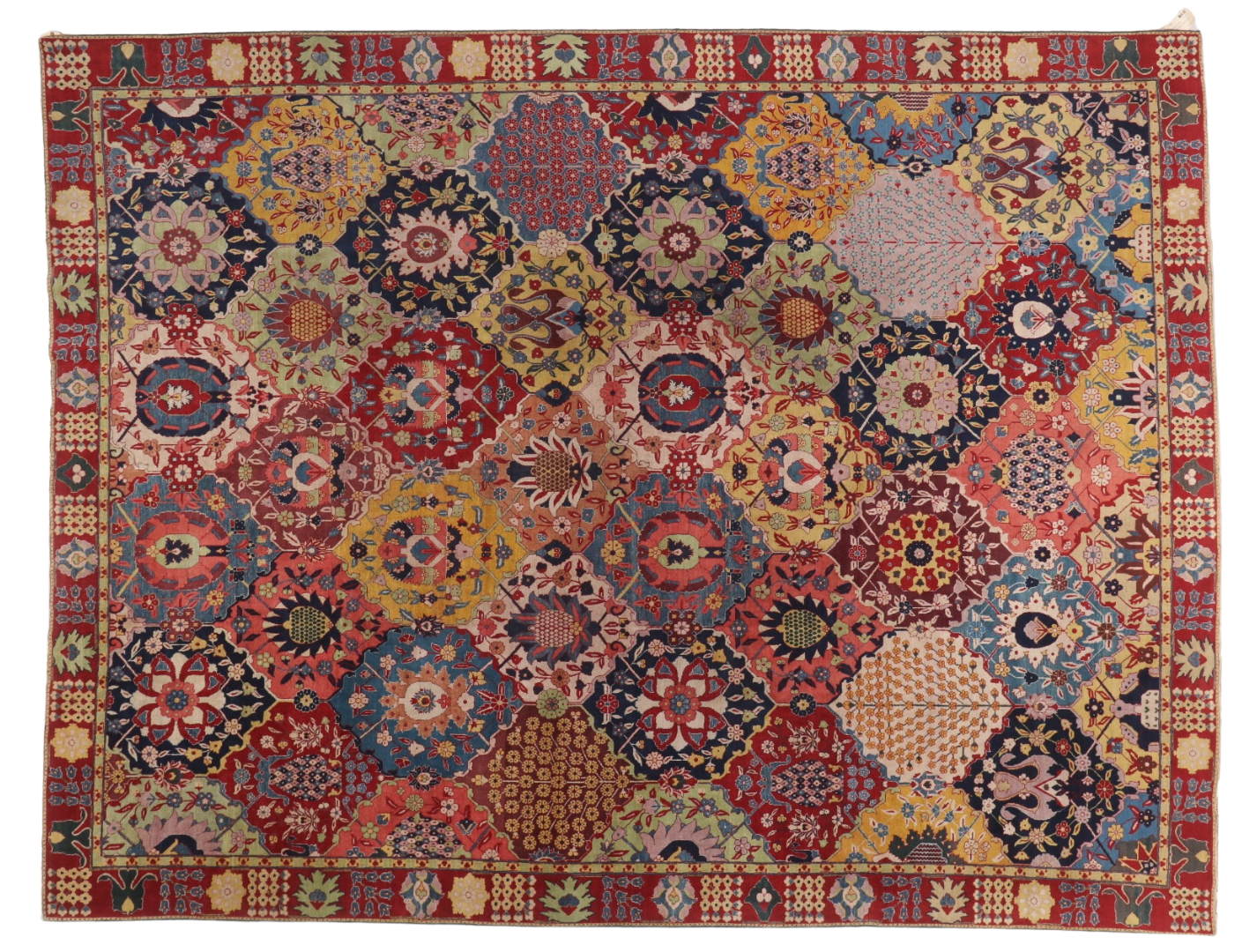
Today we explore the short but fascinating history of PETAG rugs, hailing from the ancient city of Tabriz in the North West of Persia. They’re named after their company that was set up in the early 20th Century by Heinrich Jacoby (1889-1964) in Berlin. Though they were only woven for a short period in the early 20th Century (roughly 20-25 years) they left an everlasting imprint on the history of weaving in Tabriz and are some of the more sought after rugs for collectors and connoisseurs of Persian Rugs.
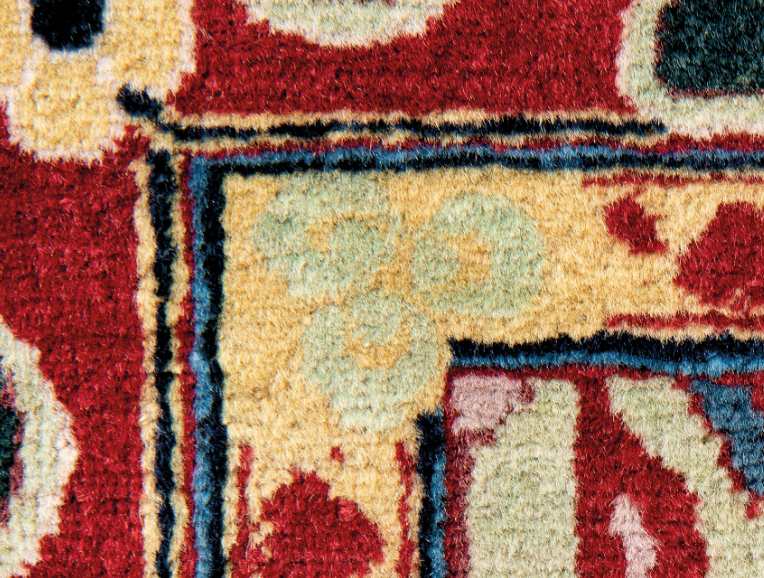
The German firm Persische Teppich-Gesellschaft (PETAG) was founded in Berlin in 1911 by Heinrich Jacoby. At his initiative, a large workshop was opened in Tabriz to weave carpets that maintained traditional quality, against the perceived decline in quality resulting from the mass commercialisation of weaving as a result of Western demand. Using lustrous wool, often coloured with vegetable dyes, the company revived the art of weaving using old and elegant designs from the 16th and 17th century. Their production is usually marked with a cintamani pearl motif. This can be seen below;
Characteristics of Tabriz PETAG Rugs
The majority of the designs were inspired by early Safavid Persian designs, and not just from Tabriz, but the designs of the master pieces from across Persia.
PETAG carpets can be identified by their use of particularly lustrous cork lamb’s wool, the finest quality wool used when weaving rugs. Natural vegetable dyes and their distinctive ‘signature’ formed of three çintamani pearls arranged in a triangular formation, often located in the far corner of the field or border pattern.
They are also of a far finer weave than their traditional Tabriz counterparts from the same time period, that is not to say fine Tabriz rugs weren’t woven during this time period but due to a much larger western demand more of what we now call ‘commercial’ pieces were being produced to meet this demand.
Buying Tips
Whilst finding a real PETAG Tabriz rug is easier than say finding a Souf Kashan, it is by no means easy and there are some common markers that one needs to be aware of;
Look for a triple çintamani pearl motif in one corner of the rug
They were always woven with Cork wool.
They follow traditional Safavid designs
Beware silk reproductions have been woven in India and sold as real PETAG rugs
