

Today everyone is looking to make their money grow when investing, and lose as little money as possible when making a purchase. This has been even more apparent in the Persian rug trade as the sale of rare, antique and one-off rugs has been increasing year on year.
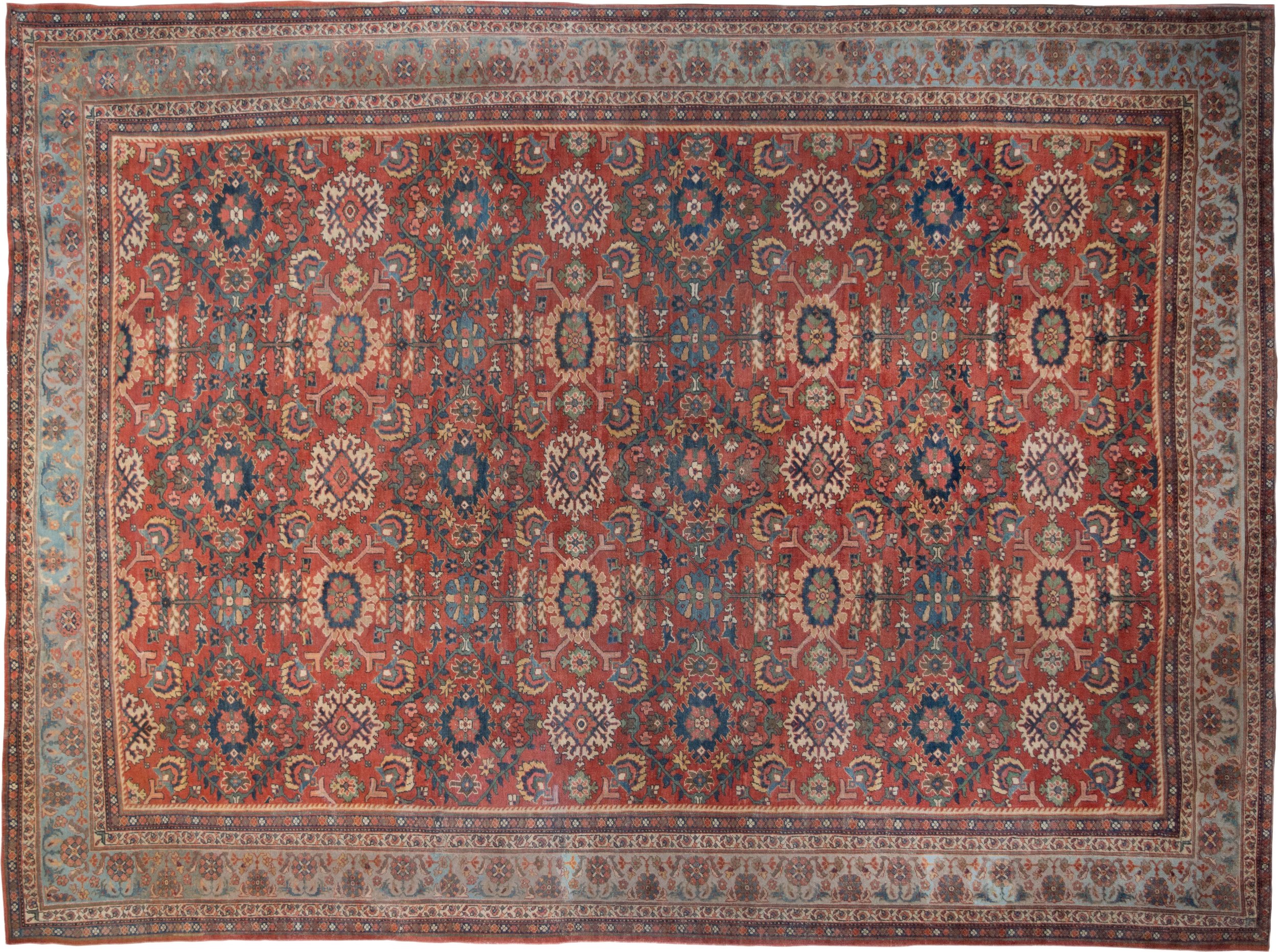
This post is here to be your one-stop guide to understanding oriental rug investment and helping you decide on whether you want to invest or not.
With the highly skilled process of oriental rug weaving decreasing in most countries, the amount of available stock on the market is also reducing. Whilst countries like Iran have in recent years have had slight rejuvenation in weaving due to increased demand, the number of high end/investable rugs in the bazaars and shops is decreasing, as the amount of highly skilled weavers has not seen an increase in quite a few decades, and each rug can take years to weave.
With the re-introduction of sanctions in the past year and more recently the civil unrest and resulting war in the country and wider region that has stopped 99% of exports from the country, this is likely to cause further constraints and supply issues for the foreseeable future. This in some ways can also be seen as an opportunity though! With interior design trends returning to traditional aesthetics and Persian & Oriental rugs, and the level of available pieces in the market staying the same, even in some cases decreasing we are seeing the prices starting to rise.
What to Look For
When buying a rug as an alternative investment it's not just as simple as walking into any rug shop and buying the first thing you see. There are a few things you need to look for when purchasing;
How old it is
Where is it from?
What condition is it in?
What material and dyes were used? (Chemical dyes/natural dyes, wool/silk/cotton etc)
Is there a signature?
These 5 questions will help you in circumventing a number of rugs that will either lose you money over time or bring little to no return on investment.

So why are these 5 points so important? Well, believe it or not, typically the older a Persian or Oriental rug the more valuable it is, so finding an older rug is always a wise decision. The origin of a rug is equally if not more important than age, generally any Persian rug will hold its value and increase over time, whilst only a few Turkish, Afghan & Chinese rugs will ever bring a return on investment.
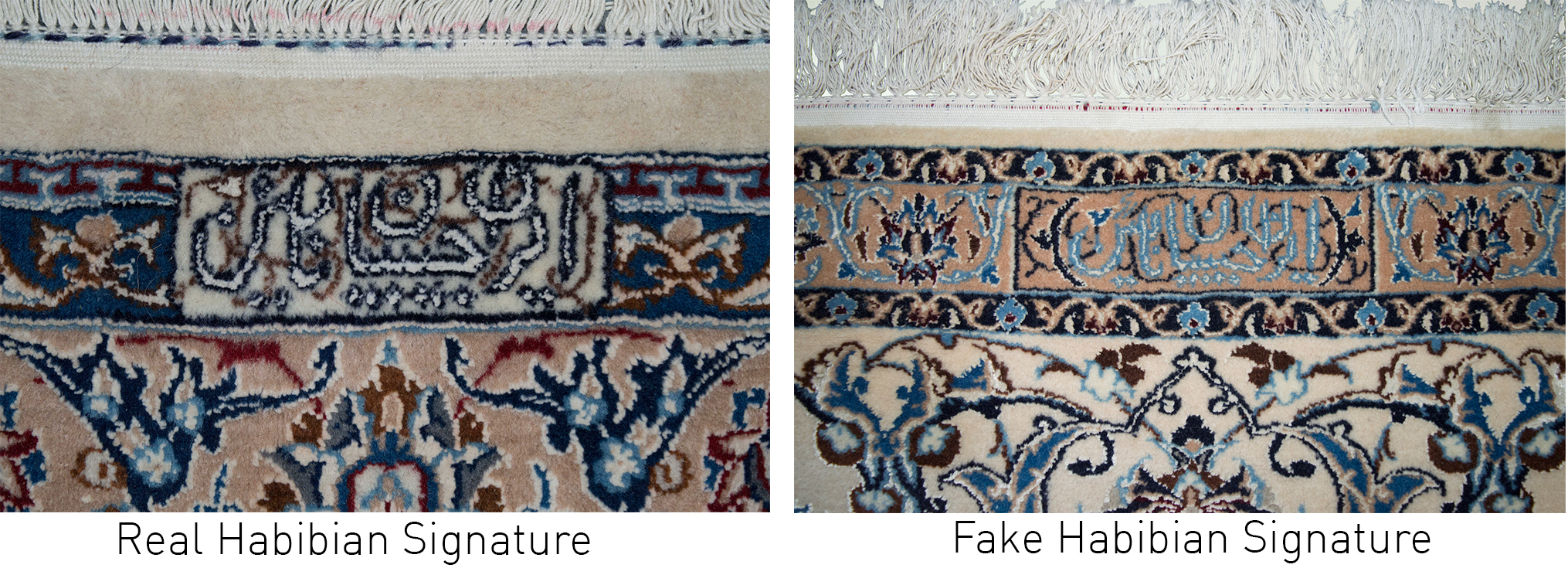
A Persian or Oriental rug with a signature woven into it can be a great indicator as to whether the carpet is good quality and if it is a worth while investment, a signature in the carpet can increase the value of the carpet by £500 - £2000 depending on who wove it and the size of the rug. However, you do need to watch out as there are counterfeit signatures that are woven into oriental rugs to inflate the price of the rug. Below is an example of a real Habibian signature and a fake Habibian signature;
What To Avoid
There are a plethora of oriental rugs on the market and knowing what to avoid and what to look for when purchasing can be extremely difficult. Below are a few things we see as major red flags when investing in an oriental rug;
Machine made rugs
An antique rug with zero signs of wear (It probably isn't an antique)
Closing down sale
Buying at Auctions
Below we will take you through each point and why it is a risk/red flag.
So why is a machine made rug such a major red flag? Well, one of the major reasons why oriental rugs have such a high value and are so well regarded is due to being hand made; hours, days, weeks and years are poured into weaving an oriental rug and it is something that machine made rugs haven't been able to capture. Thus they have no second-hand value.
Traditionally something that is old will show its age or at least have indicators towards its age, this is also true with Oriental rugs. If someone is telling you that the rug you are interested in buying is around 100 years old but it has a thick pile and absolutely no signs of wear it is quite possible that it isn’t around 100 years old. Having said this there are some antique rugs that are in perfect condition but it would take a highly skilled and reputable dealer to verify this, so you are better off not risking it.
Unfortunately the closing down sales with their 70-80% off are often too good to be true, normally the quality of rug being sold is relatively low and they are considered to be more commercial (used in hotels, libraries, stores etc) pieces rather than rare and one-off pieces.
Auctions were once a great way to get an Oriental rug at a cheaper price, however they are no longer what they once used to be. Unless you are buying from an auction house like Christies or Sotheby's the likelihood that you are buying what is being advertised is unlikely. Over the past few years we have seen numerous rugs being mislabeled and being sold as one thing when they are something completely different.

Our Top Tips
Buy from a reputable dealer with a long standing history
Avoid buying from the majority auctions and travelling rug sales
Look for an older rug (Around 50 years old or older)
Finer quality, rare and one off pieces are a sound investment
If you are looking for more information and advice on investing in an Oriental rug please call us on 0208 800 2626 or 01264 811 033 or email us at info@bakhtiyar.com where one of our Persian rug specialists will be able to guide you on finding the perfect investment piece for you and arrange for a brochure of our specialist investment pieces to be sent to you.
