
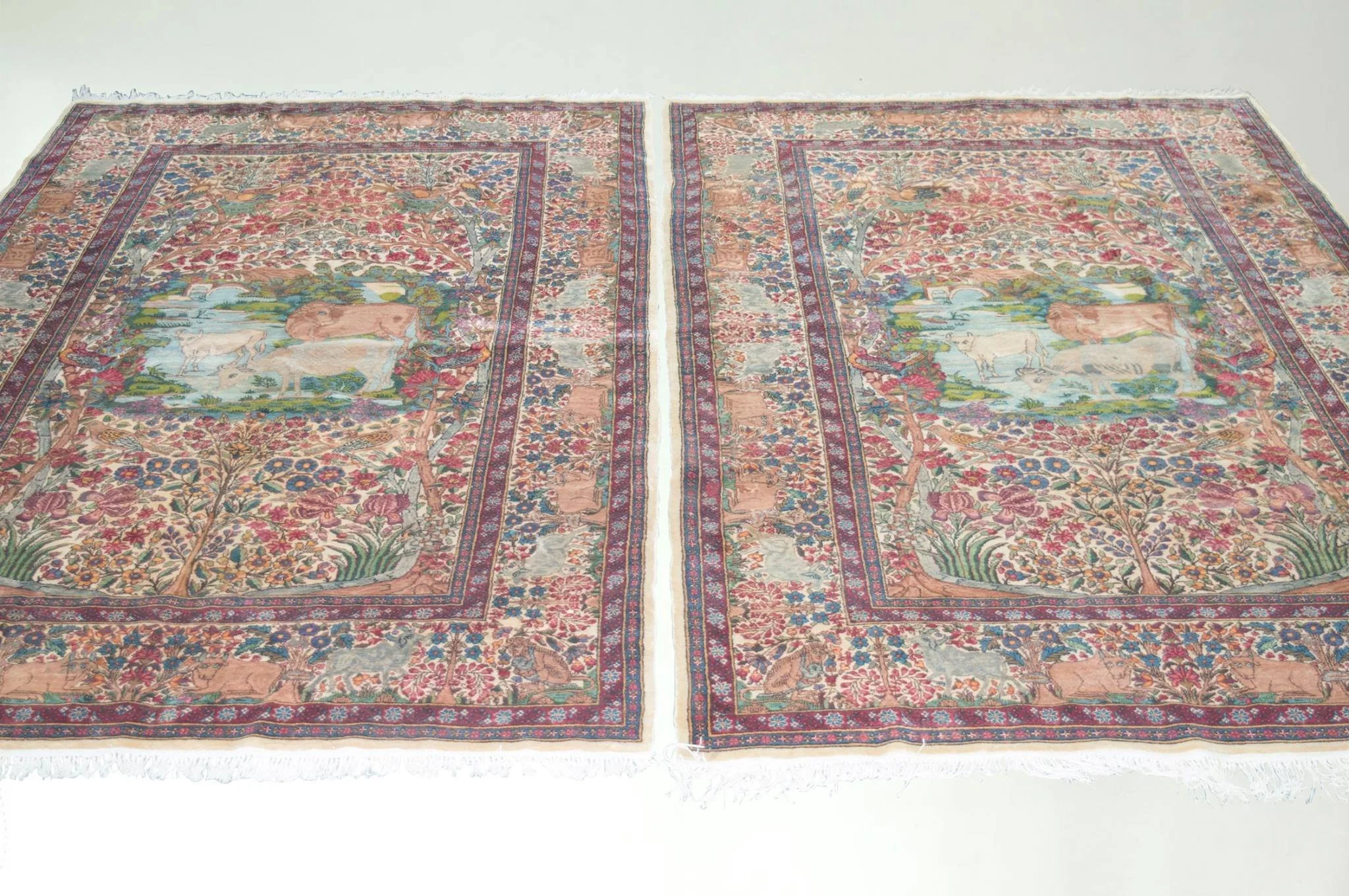
Ravar (Also Lavar) Kerman rugs were woven in the small town of Ravar, 120 miles outside of the city of Kerman and reached the height of their popularity in the 19th century. They have become rare and sought after collector pieces in today's market.
History of Ravar Kerman
Whilst weaving in Ravar reached it’s zenith in the 19th Century, its weaving history pre-dates this. Starting out as an agricultural centre renowned for its production of Pistachios. During the tumultuous Zand dynasty (1751-1794) and the start of the Qajar Dynasty (1789-1925) the importance of Kerman and more importantly Ravar grew rapidly.
At the end of the Savafid empire the Zand dynasty begun with Karim Khan Zand declaring himself ruler and started to reunite the different factions and county rulers of Persia to create a stronger more centrally governed Persia, whilst his reign was short it was a truly prosperous time for Persia, Shiraz was named the capital city of Persia and artistry, poetry & culture flourished. Upon his death his grand Nephew Lotf Ali Khan declared himself ruler, and whilst he was loved by the people of Persia, other members of the Zand family felt they were better suited to rule over Persia, and this caused great civil unrest and war. One of the largest territorial leaders of the time (Agha Mohammad Khan Qajar) believed that the Zand rulers were destroying Persia and that he could reunite the country and restore the country to its previous glory.
He was able to defeat Lotf Ali Khan in battle and take the capital Shiraz with Lotf Ali Khan escaping to Kerman where the people hid him for four months, with the help of Timur Shah Lotf Ali Khan attempted to retake control of Persia, minting new coins in Kerman (his new capital) that he used to start his rebellion against the Qajars. This ultimately was unsuccessful and brought upon the wrath of Agha Mohammad Khan Qajar, he marched on Kerman to level the city, killing all of the male inhabitants of the city, and destroying the city over a 90 day campaign.
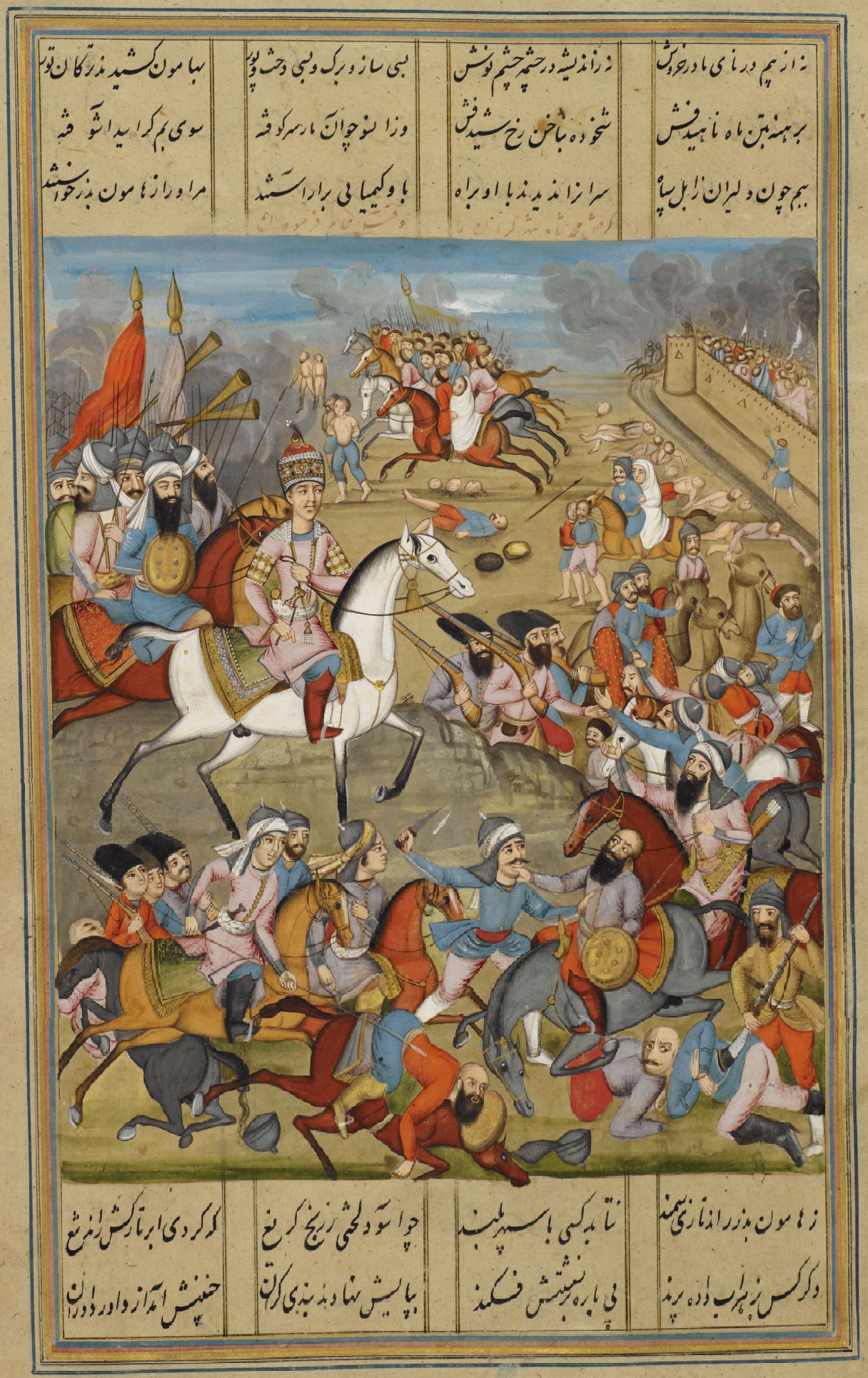
It is said that during this time, many of the greatest weavers and artisans of Kerman fled the city to the north to the small town of Ravar, where they settled to start life again, over the next generations of weavers their rugs became renowned for their fineness, intricate designs and use of colour. Whilst Kerman was rebuilt and repopulated, the master weavers did not return, preferring to stay in Ravar and this lead to the greatest Kerman rugs coming from Ravar and the more commercial pieces coming from the city of Kerman itself.
Characteristics of Ravar Kerman Rugs
Whilst Ravar no longer produces rugs to the same quality and style, the true Ravar rugs can be characterised in a few ways;
They will all date to the late 19th century and very early 20th century.
They are majority woven with Cork wool
They are more intricate in design
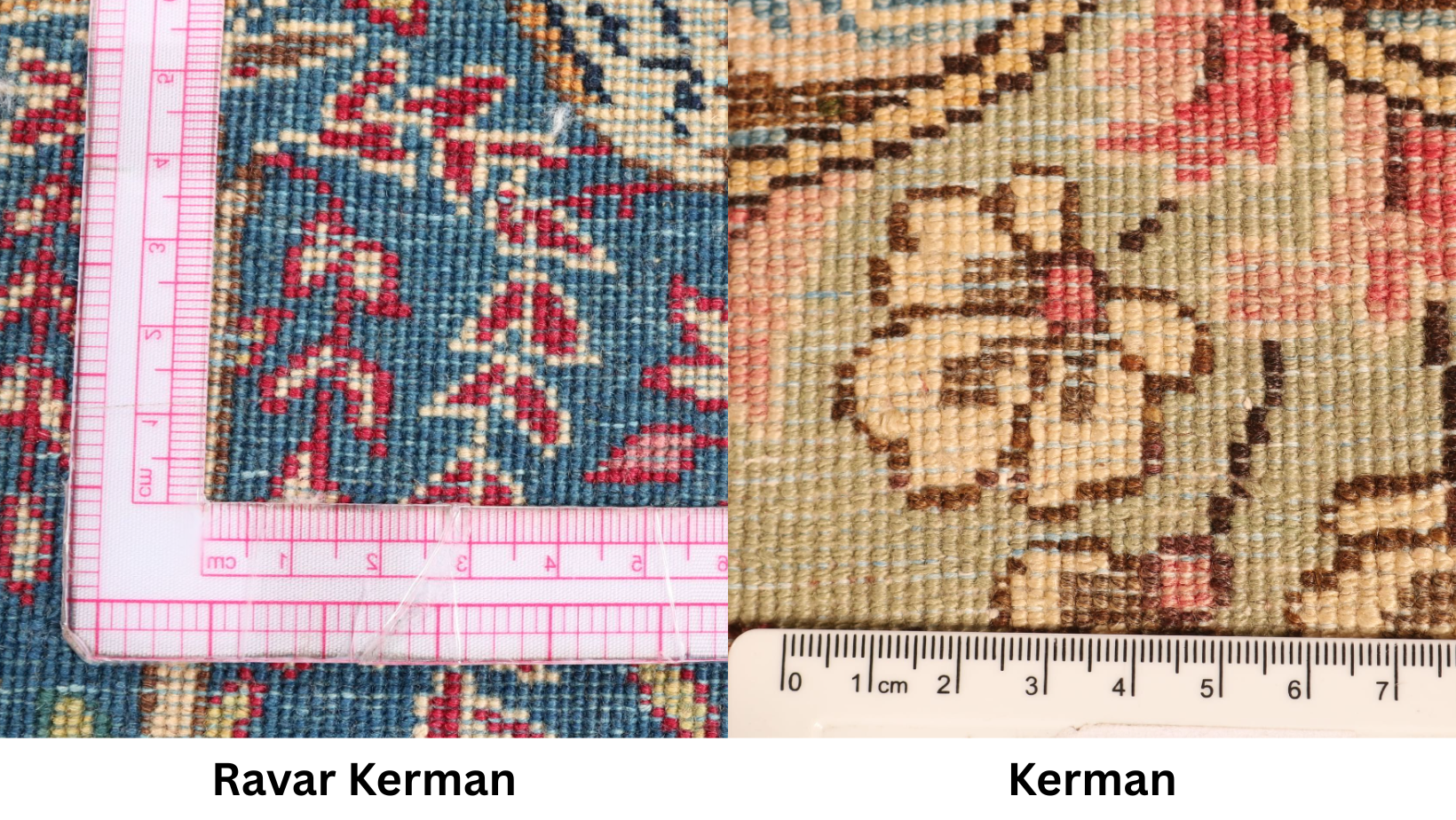
Below is an example of the weave of a Ravar Kerman & a traditional Kerman
Material in Ravar Kerman Rugs
Traditionally Ravar Kerman rugs are woven using the finest Cork wool weft on a cotton warp, however there are some very rare Cork wool and Silk Ravar Kerman rugs but these are much rarer to find. The dyes were all natural vegetable dyes and they used the finest quality dyes available at the time for their rugs.
Buying Tips
As with any collectors piece, counterfeits do exist. Moreover, Kerman rugs woven in the same time period are sometimes wrongly referred to as 'Ravar' to fetch larger sums of money.
